
 EN
EN
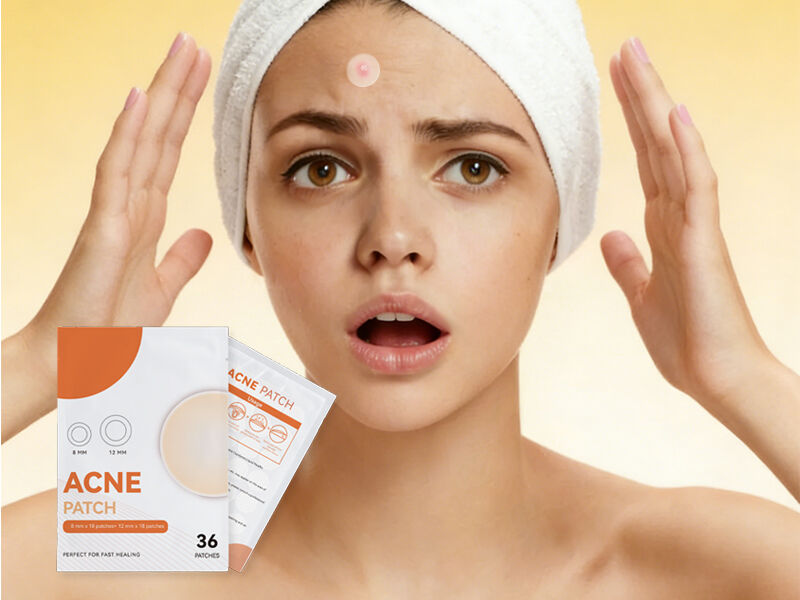
The Science Behind Hydrocolloid Acne Patches: Gentle Healing, Not Harsh Drying
Why Traditional Acne Treatments Cause Irritation—and How Hydrocolloid Differs
Most traditional acne treatments depend on strong ingredients such as benzoyl peroxide or salicylic acid. These substances work by drying out pimples pretty aggressively, but they also mess with the skin's moisture barrier at the same time. When this happens, people typically see redness, flakes appearing, and their skin gets more sensitive than usual, particularly if their skin is already reacting badly or has been damaged somehow. Hydrocolloid patches offer something completely different approach that doesn't involve chemicals. Rather than putting active ingredients onto the skin, these patches contain special materials made from hydrophilic polymers that create a sort of physical cover over the affected area. What makes them effective is how they soak up stuff coming out of pimples like pus and extra oil without messing around with the skin's natural pH balance or adding anything irritating. The whole point seems to be about keeping the skin's own defenses intact while steering clear of things that cause inflammation. This helps stop the annoying cycle where irritation leads to more inflammation that we see so often with regular topical treatments.
How Hydrocolloid Creates a Protective, Moist Wound-Healing Environment for Acne Lesions
Once applied, hydrocolloid material interacts with lesion fluid to form a soft, hydrated gel matrix—a clinically recognized moist wound-healing environment. This microclimate delivers three key therapeutic actions:
- Isolation: Seals the lesion from external bacteria, pollutants, and mechanical trauma (e.g., pillow friction or unconscious picking)
- Controlled hydration: Maintains 50–70% humidity at the wound interface—the optimal range shown in peer-reviewed studies to accelerate keratinocyte migration and tissue repair
- Passive drainage: Draws out excess sebum and inflammatory exudate via osmotic pressure across its semi-permeable membrane
This balanced environment enhances immune cell trafficking while reducing edema and pressure on sensory nerves—leading to measurable reductions in redness and swelling within hours. Crucially, it supports healing without barrier disruption, unlike drying agents that impair stratum corneum integrity.
Design Excellence: What Makes an Acne Patch Truly Invisible and Skin-Friendly
Ultra-Thin Film Construction and Transparent, Breathable Materials
Getting truly invisible patches right comes down to precise engineering work. The best acne patches today have these super thin films, sometimes just 0.01 mm thick, which means they don't look like those big old bandages anymore but still hold together well. Made from clear materials that match most skin tones, these patches basically disappear when worn, even under regular lighting conditions or after applying makeup. What makes them really stand out though is how breathable they are. These patches let air pass through in a controlled way while keeping germs away something actually tested according to standard dermatology protocols (like ISO 10993-5). This helps prevent skin from getting too moist and keeps it breathing properly throughout long periods of wear. People who try them often mention that the combination of these barely there hydrocolloid layers with their flawless integration into daily life gives them confidence during the day and comfort all day long.
Medical-Grade Adhesion That Stays Put—Without Residue or Irritation
Sticking power matters a lot when managing breakouts effectively. The best patches come with hypoallergenic medical grade glue that lasts around 12 hours straight, holding firm even when faces move around, sweat builds up, or humidity rises. Regular store bought options tend to peel at the corners, but quality ones feature specially shaped edges so they lie flat against skin surfaces completely. This matters most on oily areas such as forehead and nose where extra coverage is needed. When time comes to take them off, there's absolutely no sticky mess left behind, no red marks after removal, and nothing irritates already sensitive skin near pimples. What we get then is solid hold during treatment plus easy removal without disturbing healing process, making daily skincare routine much smoother overall.
Proven Efficacy: Clinical and Real-World Evidence for Acne Patch Performance
There's solid evidence backing hydrocolloid acne patches beyond just what people say online. A study in the Journal of Dermatological Science back in 2021 showed folks who used these patches saw their skin inflammation go down 63% faster than those who didn't treat it at all. Another piece of research from around 2006 found keeping skin properly moisturized instead of letting it dry out actually cut healing time by about 40%. What most users notice in practice is pretty quick results too. Usually within 6 to 8 hours, they can see stuff getting absorbed into the patch, which makes sense because that's basically how osmosis works. These patches really work well for certain types of pimples like whiteheads and pustules on the surface of the skin, but won't do much for deeper issues like cysts or nodules that need something stronger. Looking at actual usage data collected over three months shows another benefit: people tend to pick at their skin 70% less when wearing patches, which means fewer infections and less dark spots left behind after breakouts heal.
Smart Usage Tips: Maximizing Results with Your Acne Patch Routine
When and How to Apply an Acne Patch for Optimal Absorption and Coverage
Apply patches to clean, dry skin—immediately after cleansing and before any serums, oils, or moisturizers. Gently press the patch in place for 10 seconds to ensure full edge adhesion and eliminate air pockets. For best results:
- Daytime use: Choose ultra-thin, breathable variants; they layer seamlessly under makeup and remain discreet on visible areas
- Night treatment: Apply post-cleansing for 6–8 hours of uninterrupted, passive healing—ideal for maximizing fluid absorption
Evidence shows pus absorption increases by 73% when patches remain undisturbed for at least six hours (Journal of Dermatological Science, 2023).
Common Mistakes to Avoid—Like Overuse, Premature Removal, or Wrong Timing
Hydrocolloid patches are precision tools—not blanket solutions. Avoid these evidence-backed missteps:
- Reusing patches, which degrades adhesive integrity and introduces microbial contamination
- Removing before 4 hours, cutting short the osmotic draw phase and leaving residual exudate
- Applying over moisturizers or oils, which creates a barrier between skin and patch—reducing adhesion and absorption efficacy by up to 60%
Leaving patches on beyond 12 hours risks skin maceration and delayed barrier recovery. Instead, track weekly progress—adjust duration and timing based on your skin’s response—to refine your routine with clinical intention.
Frequently Asked Questions (FAQ)
-
What are hydrocolloid acne patches?
Hydrocolloid acne patches are adhesive patches that use hydrophilic polymers to create a protective cover over acne lesions, promoting healing without harsh chemicals.
-
How do hydrocolloid patches differ from traditional treatments?
Unlike traditional treatments that use drying agents, hydrocolloid patches absorb excess oil and pus while maintaining the skin's natural pH balance and moisture barrier.
-
Are hydrocolloid acne patches suitable for all types of acne?
Hydrocolloid patches work best for surface-level acne like whiteheads and pustules. They are not as effective for deeper acne issues such as cysts or nodules.
-
How long should I leave an acne patch on?
For optimal absorption and healing, leave the patch on for at least 6 hours, ideally up to 12 hours, depending on skin reaction.
-
Can I use moisturizers with hydrocolloid patches?
It's best to apply patches to clean, dry skin before applying any serums, oils, or moisturizers to ensure full adhesion and efficacy.